
The Black Friday & Cyber Monday Sales Playbook
Oct 18, 2026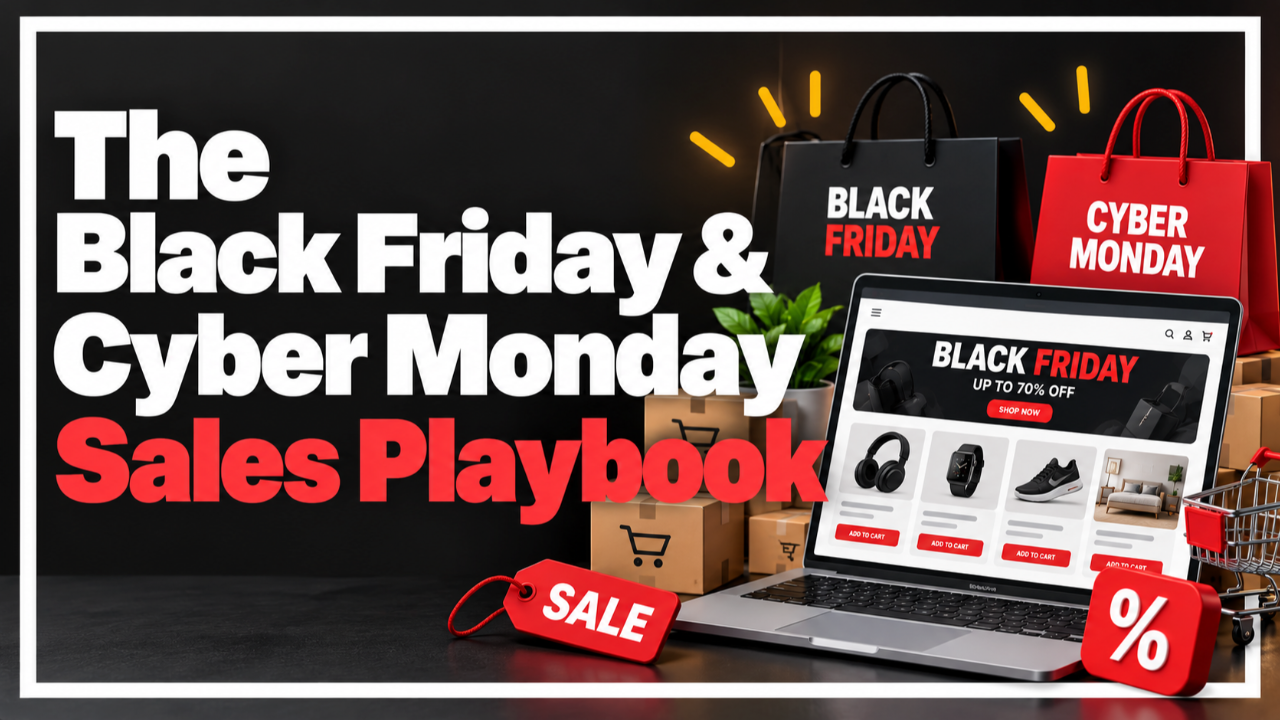
Introduction
Black Friday and Cyber Monday are not just a weekend to put a red sale banner on your homepage.
They are a chance to turn weeks of attention into a concentrated burst of sales.
Customers are actively looking for reasons to buy. They are comparing products, checking offers, saving links and watching for the brand that gives them the clearest reason to act now.
That is the opportunity.
The mistake most stores make is waiting until Black Friday morning to decide what they are doing. They launch a rushed discount, send one email, spend more on ads and hope the sales arrive.
The stronger stores build anticipation before the event begins.
They choose one clear offer. They make the store easy to buy from. They give existing customers early access. They create content around the problem their product solves. They use Black Friday to create urgency, then give Cyber Monday its own fresh reason to buy.
The goal is not to discount everything until there is no profit left.
The goal is to make the offer feel too good, too useful or too timely for the right customer to ignore.
Here is how to build a Black Friday and Cyber Monday campaign that creates real momentum instead of a frantic weekend.
The Sale Starts Before the Sale
The best Black Friday sales are often decided before Black Friday arrives.
By the time customers see the main offer, they should already know the product, trust the brand and understand why it could be useful for them.
That is why the lead-up matters.
You are not simply promoting a future discount. You are building a list of people who are interested enough to care when the offer goes live.
Start warming up the audience early.
Talk about the product problem.
Show the product in use.
Share customer feedback.
Create a waitlist or early-access list.
Mention that something is coming without revealing every detail immediately.
This gives people a reason to follow the brand, join the email list and pay attention when your biggest campaign begins.
Your pre-sale content should make customers think:
“I have been considering that product.”
“That would actually make a good Christmas gift.”
“I should keep an eye on this.”
“I want to see what the offer is.”
You do not need to make every post about Black Friday. In fact, it is better if you do not.
Keep talking about the product itself. Keep showing the problem it solves. Keep building desire.
Then layer the event on top of that.
A simple pre-sale plan could include:
-
A teaser email letting customers know the sale is coming.
-
A social post inviting people to join for early access.
-
A short video showing the hero product in use.
-
A customer review or before-and-after demonstration.
-
A reminder that stock, bonus gifts or special bundles may be limited.
-
A countdown in the final few days before early access begins.
The more attention you build beforehand, the less you have to rely on one desperate discount email at the end.
Build One Offer Customers Can Repeat
A weak Black Friday offer is confusing.
It has five different discount codes, random products on sale, unclear exclusions and a homepage that makes customers work too hard to understand what they are getting.
A strong offer can be explained in one sentence.
“Black Friday: 25% off our best-selling travel range.”
“Buy two, save more on our customer-favourite home organisers.”
“Our biggest bundle offer of the year—available until Cyber Monday.”
“Free bonus gift with every order over a set amount this weekend.”
The customer should instantly understand three things:
-
What the offer is.
-
Why it is worth paying attention to.
-
When it ends.
That is it.
Do not feel that the sale has to be a storewide percentage discount. Depending on the product, you may create more value through a bundle, bonus item, gift-with-purchase or free-shipping threshold.
For example, a pet travel store could create a Black Friday “Weekend Adventure Bundle” with several related items at a stronger combined value.
A travel-accessory store could create a “Pack Smarter” set that makes Christmas travel easier.
A home-organisation store could position the event as the chance to reset the kitchen, wardrobe, laundry or spare room before the new year.
The best offers make the product feel more useful, not simply cheaper.
Before finalising your offer, ask:
-
Can a customer understand it in five seconds?
-
Does it fit naturally with the product?
-
Does it protect enough margin to be worthwhile?
-
Does it feel special enough to stand out from a normal sale?
-
Can it be explained in an ad, email subject line and homepage banner without confusion?
-
Does it give customers a reason to buy now instead of waiting?
If the offer feels complicated to explain, it will feel complicated to buy.
Simplify it.
Make Your Store Feel Ready for the Rush
Black Friday traffic is expensive. Attention is short. Customers are impatient.
Your store needs to do its job quickly.
A customer who clicks an ad or email should land on a page that immediately matches the promise they just saw.
If the email says “Black Friday bundle,” take them directly to the bundle.
If the ad says “25% off our best-selling product,” show that product first.
Do not send someone to a generic homepage and expect them to search.
Before the campaign launches, go through the whole buying experience on your phone.
Check the homepage.
Check the product page.
Check the cart.
Check the checkout.
Check every link in every email.
A few small issues can cost a lot of sales during a busy event.
Make sure:
-
Your homepage clearly shows the Black Friday offer.
-
Your hero product or best bundle is visible immediately.
-
Your product pages explain the deal without confusing customers.
-
Your sale code works if you are using one.
-
The cart makes the savings clear.
-
Shipping information is easy to find.
-
The checkout works properly on mobile.
-
Your email capture offer is still active.
-
Your customer-support contact method is visible.
-
Your store does not feel cluttered with too many competing banners.
The best Black Friday stores feel easy.
The customer sees the offer, understands the product, trusts the store and checks out without friction.
That should be your goal.
Give Your Best Customers First Access
Your existing customers are the easiest people to sell to during Black Friday.
They already know the brand. They have already bought from you. They understand the quality of the product and the customer experience.
Do not make them wait until the general public gets access.
Give them something special.
Early access can be as simple as opening the offer to email subscribers or previous customers a few hours before the main public launch.
You do not need to create an enormous VIP program.
Just make people feel that joining your list or buying from you before had value.
Your early-access email might say:
“Our Black Friday offer goes live tomorrow. You are getting access first.”
Or:
“You are on the list, so you can shop the sale before we announce it publicly.”
Or:
“We wanted our existing customers to have first pick before the weekend rush.”
That creates a small but powerful feeling of exclusivity.
It also gives you a chance to test the campaign before the biggest traffic arrives. If a link is broken, a product is confusing or customers keep asking the same question, you can fix it before the public launch.
Early access is not just a perk. It is smart preparation.
Turn Content Into a Countdown
Black Friday content should not look like the same square graphic repeated every day.
Customers have seen “SALE COMING SOON” a thousand times.
Give them something they actually want to watch.
Your content should still show the product solving a problem. The Black Friday angle simply gives people a reason to act sooner.
For example, if you sell a pet car accessory, create content around holiday road trips, messy back seats, beach days or travelling with dogs over summer.
If you sell home products, show how customers can organise their home before Christmas guests arrive or before the new year reset.
If you sell travel products, show packing ideas, airport organisation, family trips or gift recommendations.
Use Black Friday as the reason to buy. Use the customer’s real life as the reason to care.
Create different types of content during the campaign:
-
A teaser video revealing that the biggest offer of the year is coming.
-
A before-and-after video showing the product result.
-
A gift-guide style video.
-
A “three reasons customers love this” video.
-
A customer review or customer-photo feature.
-
A short product demonstration.
-
A reminder video showing when the offer ends.
-
A Cyber Monday video with a fresh reason to buy.
The key is variety.
You do not need to show the same sale image every day. You need to keep giving customers new reasons to imagine the product in their own life.
Use Ads to Warm Up the Market
Paid ads can become expensive during Black Friday because every store is competing for attention.
That does not mean you should avoid ads. It means your ads need a job.
The first job is to warm up the audience.
Before the sale begins, use product-focused content to introduce people to the brand. Show the problem. Show the product. Show the result.
You are building familiarity.
Then, when Black Friday arrives, your offer is not being shown only to cold strangers. It is being shown to people who have already watched a video, visited the website, joined the email list or added something to their cart.
That makes the promotion stronger.
Your ad campaign can move through stages.
In the lead-up, focus on awareness and interest.
During early access, focus on the people who already know the brand.
On Black Friday, lead with the clearest offer and strongest product proof.
Over the weekend, test fresh versions of the best-performing ad.
On Cyber Monday, give customers a new message or final reason to act.
Do not launch one ad and leave it running untouched all weekend.
Watch what is happening.
Which video is getting attention?
Which message is bringing people to the site?
Which product is getting added to cart?
Which bundle is being ignored?
What questions are people asking in comments?
Use that information quickly.
If customers love one hook, make more versions of it.
If people keep asking about a product detail, answer it in the next video and improve the product page.
If one offer is clearly stronger, give it more attention.
Black Friday rewards businesses that can react fast.
Let Email Do the Heavy Lifting
Email is where Black Friday campaigns become personal.
People check their inbox during sale periods because they are actively looking for offers. But that also means they are receiving more emails than usual.
Your emails need to earn attention.
Do not send six versions of the same message with slightly different subject lines.
Build a sequence where each email has a different reason to exist.
A strong Black Friday email campaign might include:
-
A teaser email: something is coming.
-
An early-access email: first chance to shop.
-
A launch email: the offer is live.
-
A product-focused email: why the hero product is worth buying.
-
A customer-proof email: reviews, photos or real customer stories.
-
A weekend reminder: the offer is still live.
-
A Cyber Monday email: a fresh reason or final special offer.
-
A final-hours email: clear deadline, no fluff.
Each email should feel like part of a story.
The first creates anticipation.
The second rewards loyalty.
The third makes the offer clear.
The next few help customers make the decision.
The final email creates a real finish line.
Keep your email copy simple. Black Friday is not the time for long, complicated explanations.
Lead with a strong subject line. Use a clear headline. Show the product. Explain the offer. Give one obvious button to click.
You are not writing a novel. You are helping a customer decide.
Give Cyber Monday Its Own Reason to Exist
Cyber Monday should not feel like Black Friday copied and pasted with a new heading.
Customers have already seen your sale. Some bought. Some considered it. Some ignored it because the offer did not feel urgent enough.
Cyber Monday gives you one more chance to create interest.
The easiest way is to introduce a fresh angle.
You might extend the strongest Black Friday offer but add a new reason to care.
For example:
-
A Cyber Monday-only bonus gift.
-
A digital guide or useful bonus with qualifying orders.
-
A new bundle.
-
Free express shipping above a set order value.
-
A final chance to secure the Black Friday price.
-
A special offer on a second product or accessory.
-
A gift-focused angle for customers shopping for Christmas.
The key is honesty.
Do not pretend your Black Friday sale ended if it did not. Do not create fake urgency. Do not confuse customers with constantly changing terms.
Instead, give Cyber Monday a genuine purpose.
Maybe Black Friday was about your hero product. Cyber Monday could be about bundles.
Maybe Black Friday was about the biggest percentage saving. Cyber Monday could be about a bonus product.
Maybe Black Friday targeted existing customers. Cyber Monday could focus on people who visited the store but did not buy.
A fresh angle makes the final day feel like an event rather than an afterthought.
Make Checkout the Easy Part
You have done the hard work.
The customer saw the content. They clicked the ad. They read the product page. They added the item to cart.
Do not lose them at the final step.
Checkout friction is expensive during Black Friday because customers have ten other tabs open. If your checkout feels slow, confusing or unexpectedly expensive, they may simply buy somewhere else.
Keep the process simple.
Make sure the customer can see:
-
The product they are buying.
-
The discount or bundle saving.
-
Delivery options.
-
Any shipping threshold.
-
Payment choices.
-
How to contact you if something goes wrong.
Avoid surprise costs.
Avoid making customers create unnecessary accounts.
Avoid adding too many pop-ups at the final step.
If you have abandoned-cart emails, make sure they are active and relevant for the event. A customer who leaves the cart during Black Friday may simply be comparing options or getting distracted. A clear reminder with the offer deadline can bring them back.
The best abandoned-cart messages do not sound desperate.
They remind the customer what they were interested in, reinforce the value and make the next step easy.
Keep the Customer After the Sale
Black Friday is not only about how much you sell over a few days.
It is also about how many new customers you bring into the brand.
Someone who buys during Black Friday could become a repeat customer, leave a review, buy a bundle, tell a friend or return for a Christmas purchase.
That is why the post-purchase experience matters.
Send a strong order confirmation.
Tell customers what happens next.
Give them a helpful tip related to the product.
Keep them updated while the order is on the way.
Check in after delivery.
Invite them to share a review or photo if they love the product.
You do not need to sell to them again immediately. First, make the first purchase feel good.
Then, once they have had time to use the product, introduce the next relevant offer.
A Black Friday customer can become much more valuable than one discounted order if you stay connected.
Final Thoughts
Black Friday and Cyber Monday are not won by the store with the loudest sale banner.
They are won by the store that makes the offer easiest to understand and hardest to ignore.
Build the audience before the event.
Choose one clear offer.
Give existing customers early access.
Create content that makes people care about the product.
Use paid ads to build familiarity, not just chase last-minute sales.
Let email create the urgency.
Give Cyber Monday its own reason to exist.
Then make sure the customer experience is good enough that the sale turns into a relationship.
The best Black Friday campaigns do more than create a busy weekend.
They create new customers, stronger proof, better content, more email subscribers and a business that enters the Christmas period with real momentum.
OPPORTUNITY ALERT
Ready to get started with your own drop shipping business? Check out all the Australian "Done For You" dropship stores on our marketplace! They are completely set up, optimised, have great reliable Aussie suppliers in place and are 100% ready to start advertising.
