
What Laws Do You Need to Follow for Dropshipping in Australia?
Apr 15, 2026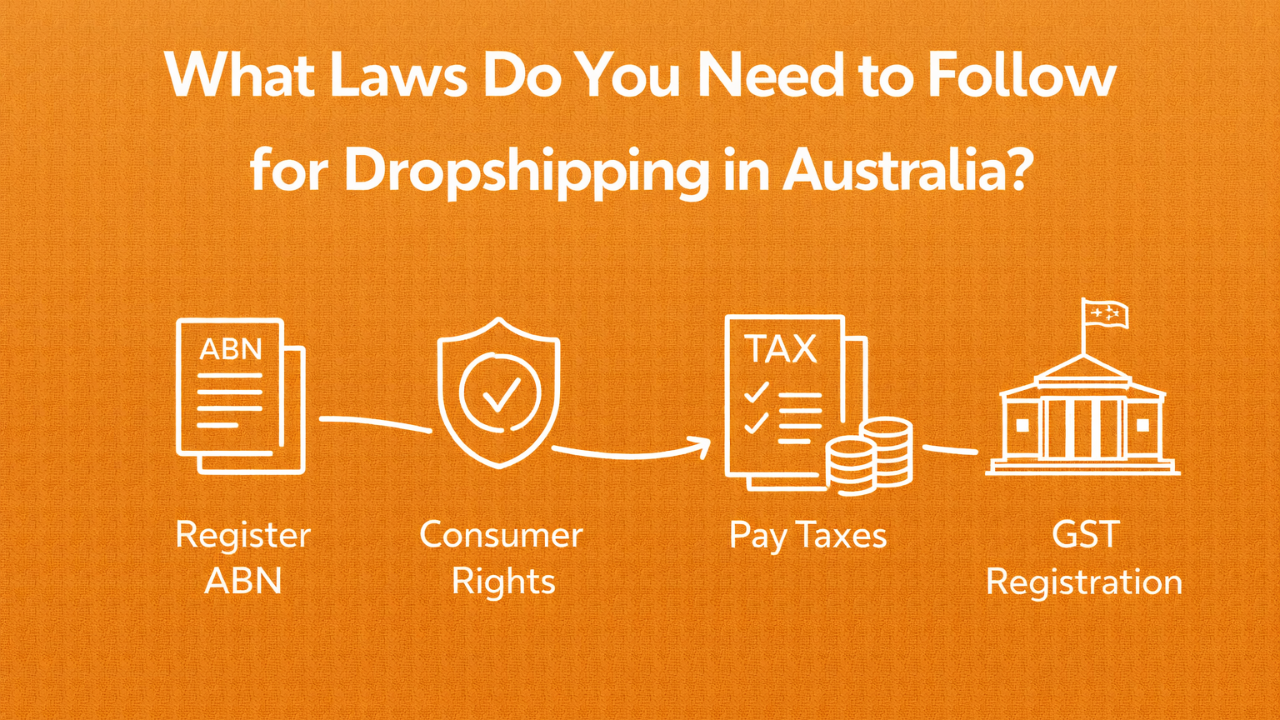
Introduction
One of the biggest things that holds people back from starting dropshipping in Australia is uncertainty around the legal side.
What laws do you actually need to follow?
The answer is simpler than most people think.
Dropshipping isn’t a special loophole or a grey area. It’s just ecommerce. That means you follow the same laws as any other online business in Australia.
If you understand a few key areas—consumer law, business setup, taxes, and product compliance—you’re covered.
This article breaks it all down in plain terms so you know exactly what matters and what doesn’t.
.
The Core Laws You Must Follow
At a basic level, dropshipping in Australia is governed by standard business laws.
There’s nothing unique about it.
You’re required to follow:
-
Australian Consumer Law (ACL)
-
Business registration and tax obligations
-
Product safety and compliance rules
If you treat your store like a real business, you’re already on the right track.
.
Australian Consumer Law (ACL)
You are responsible for the customer
This is the most important rule to understand.
Even if your supplier handles shipping, you are legally responsible for the sale.
That includes:
-
Product quality
-
Delivery expectations
-
Refunds and returns
You can’t pass blame to your supplier.
What you must provide
Under ACL, customers are entitled to:
-
Products that match the description
-
Acceptable quality
-
Refunds or replacements if something goes wrong
If your store doesn’t meet these standards, you risk complaints or legal issues.
Clear communication matters
You must clearly state:
-
Shipping times
-
Return policies
-
Product details
Misleading customers—even unintentionally—can create problems.
.
Business Setup and Registration
Do you need an ABN?
If you’re running a dropshipping store to make money, you’ll generally need an ABN (Australian Business Number).
This allows you to:
-
Operate legally
-
Work with suppliers
-
Report income properly
Sole trader vs company
Most beginners start as a sole trader.
It’s simple and low cost.
As you grow, you can move into a company structure if needed.
Keep it simple early
You don’t need a complex setup to start.
Just make sure:
-
You’re registered
-
You track your income
-
You treat it like a business
.
Taxes and GST
Do you need to pay tax?
Yes.
All income from your dropshipping store must be declared.
This applies even if you’re just starting out.
When GST applies
You need to register for GST when your revenue reaches $75,000 per year.
Once registered:
-
You charge GST on sales
-
You report it through your BAS
If you’re below that threshold, you may not need to register yet.
Keep records from day one
Track:
-
Sales
-
Expenses
-
Profit
This makes tax time much easier.
.
Product Safety and Compliance
Not all products are equal
Some products are more regulated than others.
Examples include:
-
Electrical products
-
Health and beauty items
-
Baby and children’s products
These may require:
-
Certifications
-
Safety standards
-
Specific labeling
Why this matters
Selling non-compliant products can lead to:
-
Refunds
-
Legal complaints
-
Platform bans
Choose safer categories
If you’re unsure where to start, reviewing Top 50 Australian Dropshipping Niche Ideas can help you focus on proven, lower-risk product categories instead of guessing.
.
Supplier Responsibility (And Your Risk)
You still carry the risk
Even though suppliers fulfill orders, you are still responsible for:
-
Customer satisfaction
-
Delivery issues
-
Product problems
This is where many beginners get caught out.
Work with better suppliers
Ideally, choose:
-
Australian suppliers
-
Fast shipping options
-
Verified quality
This reduces risk significantly.
Avoid the “cheapest option” trap
Cheap suppliers often lead to:
-
Slow delivery
-
Poor quality
-
High refund rates
That creates both legal and financial problems.
.
Privacy and Website Requirements
You need basic policies
Every store should include:
-
Privacy policy
-
Terms and conditions
-
Refund policy
-
Shipping policy
These are not optional.
They protect both you and your customers.
Data handling matters
If you collect customer data (which you do), you must:
-
Store it securely
-
Use it appropriately
-
Not misuse personal information
This falls under Australian privacy expectations.
.
The Shortcut Most Beginners Miss
Most people try to piece all of this together themselves.
That leads to:
-
Confusion
-
Mistakes
-
Delays
This is why starting with a prebuilt store can make sense.
It often includes:
-
Proper policy pages
-
Structured setup
-
A cleaner starting point
So instead of guessing, you’re working from something that’s already aligned with how a real store should look.
It doesn’t remove responsibility—but it simplifies the start.
.
Common Mistakes
-
Ignoring consumer law responsibilities
-
Using unverified overseas suppliers
-
Selling regulated products without checking requirements
-
Not having clear policies
-
Misleading product descriptions
-
Not tracking income properly
Most legal issues come from shortcuts, not complexity.
.
FAQ
Do I need an ABN for dropshipping in Australia?
Yes, if you are running it as a business and earning income.
Is dropshipping different legally from normal ecommerce?
No. The same laws apply.
Who is responsible for refunds and issues?
You are, not the supplier.
Do I need to register for GST immediately?
Only once you reach $75,000 in revenue.
Can I sell any product I want?
No. Some products have strict regulations and must meet Australian standards.
.
Summary
Dropshipping in Australia is legal and straightforward when you follow the core rules. Focus on consumer law, proper setup, compliant products, and clear policies, and you avoid most issues before they start.
.
Final Thoughts
The legal side of dropshipping isn’t complicated.
It only becomes a problem when people ignore it.
If you take a simple, structured approach and treat your store like a real business from day one, you stay compliant without overthinking it.
And more importantly, you can focus on what actually matters—building something that works.
OPPORTUNITY ALERT
Ready to get started with your own drop shipping business? Check out all the Australian "Done For You" dropship stores on our marketplace! They are completely set up, optimised, have great reliable Aussie suppliers in place and are 100% ready to start advertising.
